Nigehban Ramzan Package Payment Distribution Schedule in March 2026
Nigehban Ramzan Package Payment Distribution Schedule
The Nigehban Ramzan Package Payment Distribution Schedule establishes payment times for the program. Ramadan brings spiritual peace but Ramadan creates financial difficulties for many families in Punjab who face increased costs for basic goods like flour and sugar and cooking oil and electricity during this time. The provincial government created the Nigehban Ramzan Package because of existing financial needs which allow them to provide 10 000 rupees to eligible families. The program enables low-income families to cover their basic needs during Ramadan without losing their self-respect and financial security.
The officials have developed the program with confirmed information to provide assistance to families who require support. The authorities currently implement digital verification together with phased disbursement as an alternative to traditional distribution methods which created delays and overcrowding issues. The Government of Punjab administrative sources report that the organization aims to deliver financial aid through transparent processes which ensure speedy results and maintain equitable treatment of recipients.
Local administrators have determined through their observation of previous relief programs that direct cash support enables families to decide how to use their funds. The support helps some households maintain their household budgets during Ramadan while other households use it to pay their utility bills and grocery expenses.
You Can Also Read: Pm Ramzan Relief Package Portal To Check Status
Household Identification and Data-Based Selection Process
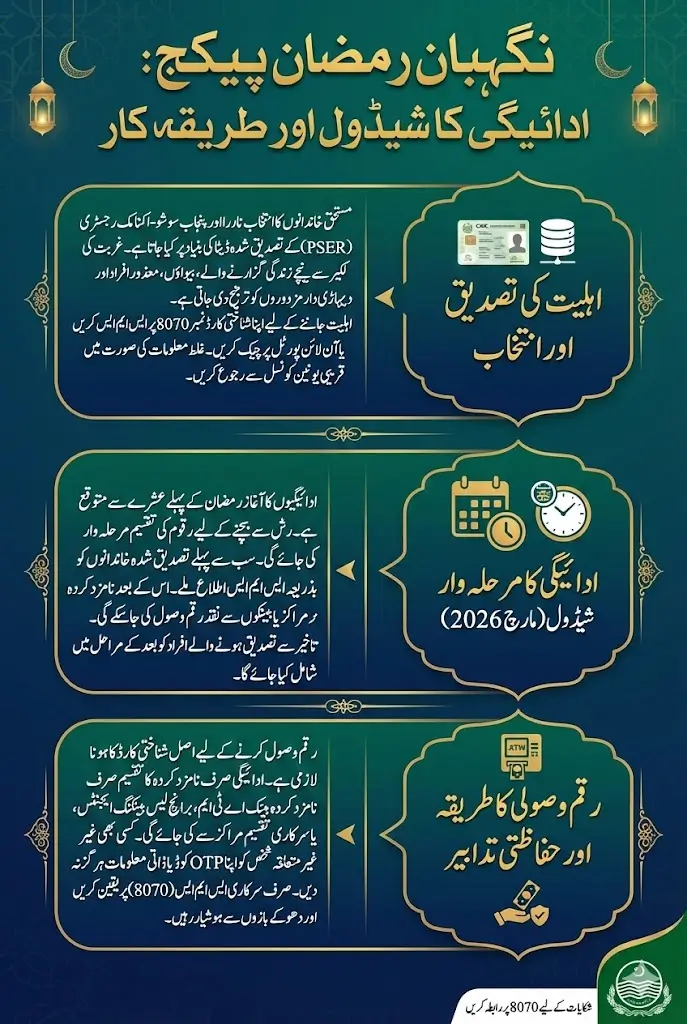
The selection of beneficiaries depends on verified socio-economic data which needs to be verified before proceeding. Authorities cross-check household information through national identity records and poverty profiling databases. Officials can assess income level and employment condition and living standards through data integration between NADRA and the Punjab Socio-Economic Registry PSER system which supports their eligibility verification process.
The digital screening process uses automated methods to minimize human mistakes while providing unbiased results throughout different regions. The system assesses three main elements which are household size and dependency ratio and asset ownership. Officials report that families already categorized as financially vulnerable are prioritized during verification.
Priority groups include individuals who experience permanent economic challenges. The program aims to assist citizens who suffer most from inflation and unpredictable income streams during Ramadan.
Key indicators used in the selection process include:
- Monthly household income below the official poverty threshold
- Valid CNIC registered within Punjab province
- No permanent government employment in the household
- Limited ownership of property, land, or vehicles
- Verified entry in the provincial socio-economic registry
- Higher priority for widows, disabled individuals, and daily wage workers
You Can Also Read: 9999 Nigehban Ramadan Package
Eligibility Conditions and Qualification Requirements
The Rs 10,000 assistance program uses a structured system which ensures fair distribution of benefits to eligible applicants. The authorities use both economic vulnerability assessment and household stability assessment to determine who meets the eligibility criteria. Families need to maintain correct personal and financial details in their official documents because any mistakes can cause delays in verification and result in temporary removal from the beneficiary list.
The program includes households which already receive social protection benefits when they satisfy the poverty score requirements. Data matching with welfare databases helps identify families that remain financially vulnerable despite previous support.
The applicants must understand that their eligibility status will change because their household data will be evaluated at different times. The applicants must maintain correct records because accurate documentation serves as the basis for their ongoing participation in relief programs.
Essential eligibility requirements include:
- Resident of Punjab with a valid computerized national identity card
- Registered and verified in PSER database
- Household not receiving a government salary
- No high-value assets or commercial property
- May include verified beneficiaries of Benazir Income Support Programme (BISP) if poverty criteria are met
You Can Also Read: Ramzan Nigehban Registration Online
CNIC Verification Methods for Beneficiary Confirmation
The authorities established two verification methods which enable all citizens to verify their identity through SMS messages and online platforms. The available options enable both urban and rural residents to confirm their eligibility without having to travel to offices for verification.
The SMS method is widely used because it requires only a mobile phone. The process starts when applicants send their CNIC number through which they will receive an automated response that shows their eligibility status and additional verification requirements. The process enables families to complete their payment collection preparations before the actual payment time.
The online portal allows users to check their household details while obtaining the option to make necessary changes. The system provides applicants with a way to fix their mistakes which would have otherwise postponed their financial aid distribution.
Verification methods available to citizens include:
- Send CNIC number via SMS to 8070 for eligibility confirmation
- Access the PSER online portal to review verification status
- Update incorrect family or income information if required
- Keep registered mobile number active for official notifications
You Can Also Read: Prime Minister’s Ramzan Package 2026 Registration
Payment Distribution Strategy for March 2026
The authorities developed a distribution plan which implements distribution in stages to achieve organized payment operations throughout Punjab. The program distributes funds according to a schedule which starts with confirmation messages and ends with cash disbursement instead of releasing funds to all districts at the same time.
The officials predict that SMS notifications confirming approval will reach verified households as their first notification. The beneficiaries will receive payment collection instructions which include information about collection locations and collection times after they receive confirmation. The distribution centers use this approach to maintain order and operate their facilities without interruptions.
The distribution strategy provides distribution methods for households who complete their verification process at a later time. The process handles these cases through subsequent stages because it allows eligible citizens to receive their benefits after they complete record verification.
You Can Also Read: 8070 Registration Online 2026 Payment & Ration
| Distribution Phase | Expected Period | Process Description |
|---|---|---|
| Verification Notification | Before first Ashra of Ramadan | Eligible families receive SMS confirmation |
| Primary Disbursement | Early to mid Ramadan | Cash payments released to approved households |
| Supplementary Processing | Later Ramadan weeks | Pending and reverified applications processed |
Payment Collection Channels and Disbursement Methods
The program provides multiple payment channels so beneficiaries can receive funds conveniently without traveling long distances. Citizens will receive official instructions regarding their designated collection method before visiting any center.
Each payment channel follows strict verification procedures to ensure funds reach the rightful recipient. CNIC confirmation at the time of collection is mandatory for transparency and accountability.
Approved payment collection methods include:
- Withdrawal through designated bank ATM facilities
- Collection from authorized branchless banking agents
- Payment through registered government distribution centers
- Official SMS notification confirming payment instructions
You Can Also Read: PM Ramzan Program 2026 Cash Support of PKR 13,000
Actions for Applicants Not Yet Approved
Some applicants may not appear on the beneficiary list during the initial verification phase. In many cases, this occurs due to incomplete or outdated household information rather than permanent ineligibility. Authorities recommend updating records promptly to increase the chances of approval in later phases.
Local administrative offices provide guidance for citizens who need to correct their data. Ensuring accurate information about income, family size, and living conditions is essential for proper assessment.
Recommended steps for applicants awaiting approval include:
- Update household and income details in the PSER database
- Visit the nearest Union Council for verification assistance
- Confirm that CNIC and mobile number records are accurate
- Avoid unofficial agents or fake registration links
Safety Instructions for Beneficiaries During Payment Process
Authorities have introduced strict security measures to protect citizens from fraud and unauthorized deductions. Beneficiaries are advised to follow official instructions carefully and avoid sharing personal information with unknown individuals.
Payment centers are required to verify identity before releasing funds, ensuring that assistance is delivered responsibly. Maintaining awareness and following guidelines helps prevent misuse of financial support.
Important safety instructions include:
- Bring original CNIC for payment collection
- Do not share OTP codes or personal information
- Follow only official government communication
- Keep registered mobile number active for alerts
Conclusion
The Nigehban Ramzan Package Payment Distribution Schedule in March 2026 serves as a systematic initiative which delivers specific financial assistance to economically disadvantaged families throughout Punjab. The authorities will achieve their goal of efficient and respectful assistance delivery through their system which combines digital verification with phased distribution and multiple payment channels.
The financial support of Rs 10,000 during Ramadan enables numerous families who experience inflation and unstable income to establish financial stability. Citizens who believe they qualify should verify their CNIC status promptly and ensure their records remain accurate. The process of verifying information at the correct time together with understanding official updates will enable eligible households to receive assistance in a timely manner.